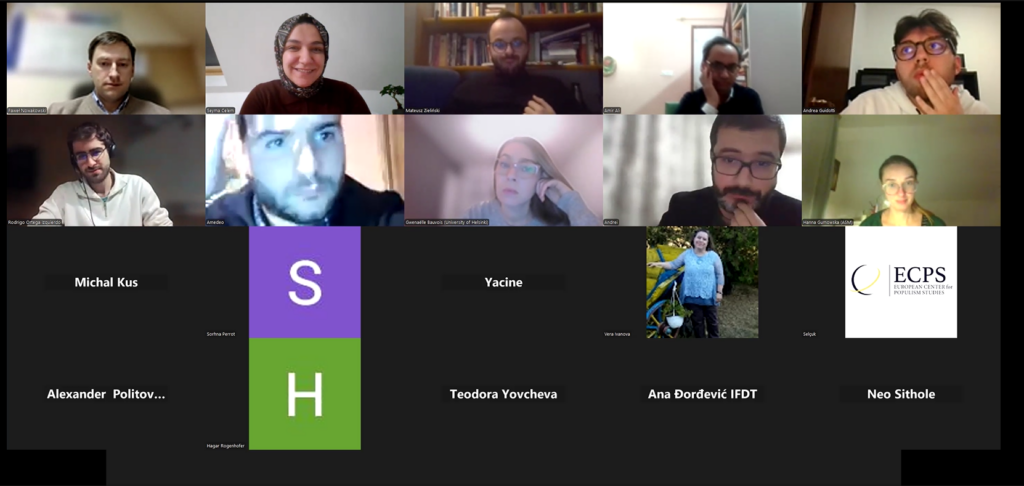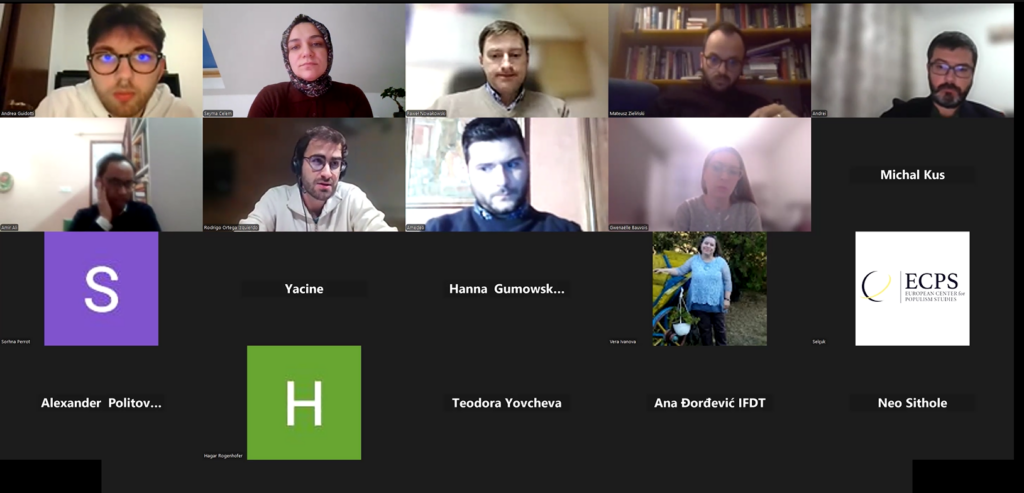


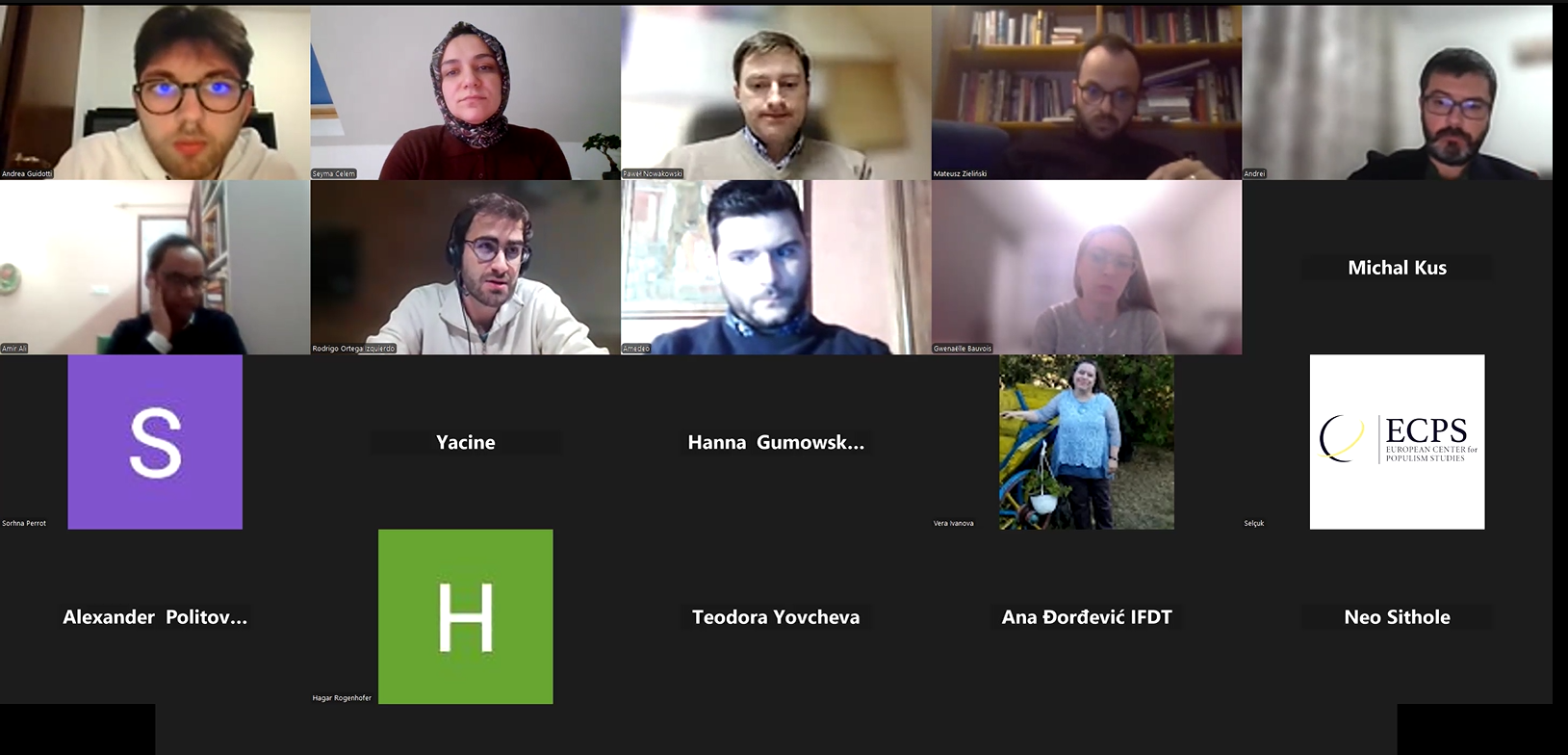
ENCODE successfully organized an online workshop that brought together researchers, practitioners, and stakeholders to discuss the project’s latest theoretical and empirical developments. The event, held from 16:00 to 17:30 CET, provided an overview of the project’s key research strands and created space for exchange and reflection.
The workshop opened with a brief welcome and introduction to the ENCODE project, outlining its overarching objectives and research focus on the role of emotions in political engagement. Participants were invited to join ahead of the official start time to ensure a smooth technical setup and timely commencement of the session.
The first substantive presentation focused on Work Package 2 – Theoretical Framework, with findings presented by Dr. Paweł Nowakowski from the University of Wrocław. The session introduced key theories of emotional politics and elaborated on the concept of affective pluralization, which constitutes a central pillar of ENCODE’s conceptual framework. Dr. Mateusz Zieliński also participated in the subsequent Q&A session, contributing additional insights and responding to participants’ questions.
The second presentation addressed Work Package 3 – Social Media Content Analysis, with findings presented by Rodrigo Ortega Izquierdo from PredictBy. This session explored how political emotions, narratives, and disinformation are expressed and circulated across European social media platforms, highlighting the role of digital environments in shaping emotional political communication.
The workshop concluded with a joint Q&A and open discussion, during which 21 experts and academics actively contributed through questions and comments. The high level of engagement reflected strong interest in ENCODE’s research and its relevance to ongoing academic and policy debates. The session concluded with a brief wrap-up that outlined the next steps of the project and upcoming dissemination activities.
This online workshop represents an important milestone in ENCODE’s dissemination efforts, reinforcing dialogue with expert communities and supporting the project’s commitment to transparent and impactful research communication.